
Sacred Heart and St. Augustine's Church Information
Praying for more patience and love
REFLECTION ON the 16TH SUNDAY OF ORDINARY TIME YEAR A-2026.
The readings of today answer the question why God should allow the evil people in our world. The first reading from the Book of Wisdom is God’s response to Israel’s question: why should the wicked prosper and righteous not?
After the return of the Jews to Palestine in 538 BC, they were never masters of their own history. Politically they had no say in their own destiny. They were under the imperial rule of a succession of empires. And these were pagan nations. Under Antiochus Epiphanes iv this became the cruellest oppression and persecution of the Jews. He forbade all Jewish religious ceremonies:circumcision,burnt offerings and sacrifices and suppressed the Sabbath and feast days. Instead they compelled them to Greek-style religious ceremonies. Refusal to comply would attract the death penalty.
So, they wondered why they should suffer humiliation and oppression, and the pagan nations who violate God’s Command prosper and enjoy life. The Israelites want to see these nations punished by God. This is typical of us.have we never wished that God would punish the wicked?
People who have power use it often to put down others and force them into obedience and respect. But God is not like that. He does not love only the good people, he loves all, even the wicked, because they are also his children, all He wants is that they amend their ways and live. He uses his power not to punish, but to save, and he wants us to do likewise.
The author of the Book of Wisdom reminds us that God’ omnipotence is expressed not in destroying sinners but in giving them time to repent. Through such works he taught us that the righteous must be kind. The psalmist highlights it by saying that his steadfast love endures forever.
St. Augustine said many are at first weed but then became good grain and he added If these, when they are wicked, are not endured with patience they would not attain their praiseworthy transformation.
If God had judged Peter after his denial, Paul after persecuting Christians, or Augustine after his sinful youth, the Church would have lost some of her greatest saints.
God is ever patient. Patience is the hidden face of love. At a deep level, patience is love-supporting, bearing all things and everyone. To be impatient with someone means to consider him unbearable. Parents need this patience with their struggling children. Children need it with ageing parents. Husband and wife need it with one another.
In Jesus ‘time the people believed that the coming of the Messiah would be the start of the kingdom in which there would only be good people. In Lk 9:54 the disciples asked Jesus to permit them to call down fire from heaven to burn up the Samaritans, who refused to welcome them. Jesus did not want to hear talk on fire except the fire of God’s love. He welcomed sinners, invited them into his house, shared meals with them, and kept company with thieves, tax-collectors and prostitutes. And he was called a friend of sinners.
In the Gospel the Sower sowed good seed in his field. But while he was asleep, an enemy came and sowed evil seed. In the Book of Genesis after creating the world God said everything was very good. The Sower of good seed is Jesus, while the devil is the Sower of evil seed. The evil seed is planted in our hearts, minds and culture.
These seeds include cynicism-nothing matters, everyone is corrupt. There is no objective truth-your truth, my truth,LGBTQ,maid.Seed of pride,resentment,envy,bitterness,anxiety,addiction to pornography, drugs and alcohol, are things that choke the good seed that is planted in our hearts. The evil seeds are real, but they don’t have the final word.
We live in a world where good and evil grow side by side, in our families, in our workplaces, and even in our churches. The servant wants to rip out the weeds immediately. Be calm, says the owner of the field.
How often do we want quick answers? Cancel people, leave the parish, quit marriages and judge our co-workers? Be calm, says the owner of the field. This reveals God’s attitude toward the evil that exists in our world, in the Church and individual.
Human judgement often sees only the present, God sees the future. We see failure God sees potential. We see a sinner, God sees a saint in making. We are God’s project, a work in progress.
However, at the end of time, there will be reckoning-wheat to barn, weed to fire. This is not to scare us, it is to give us hope. Evil does not get the last word; injustice wouldn’t go unanswered.God is the Lord of the universe,the devil is a creature and is under God's control.
The line separating good from evil is not between individual or group of individuals or between nation and nation, it is in the heart of every person. No one is created evil. It is what we do and what we don’t do that makes us either good or evil.Where God is absent,nothing can be good.
Therefore, we must not allow the weed to take over our garden. The fruit will only be good if the terrain of life is cultivated in accordance with divine will. This calls for constant repentance, renewal and reconciliation.
The parable of Sower is not meant to ignore evil. It is a call to trust God’s timing. There will be harvest, justice will come. But until then our job is not to be the judge or job is to keep growing wheat. The question is not why is there evil? But I am growing wheat or weed where I am planted?
What weed am I tempted to pull in someone’s life? Can I pray for them instead of judging? What weed is growing in my own soil-resentment,addiction,cynicism.Where do I need God’s patience in my kids, my spouse, my Church, my priest, country and society.
REFLECTION ON 14TH SUNDAY OF YEAR A-2026
Today’s gospel speaks of three important Biblical themes: revelation of divine mysteries to mere children. And an invitation to divine rest and call to imitate Christ’s humility and gentleness.
Children are full of wonder, trust and humility. They have a wonderful way of living and loving for a moment. When it is time for them to show joy they smile, to have fun they play and when they are hurt, they cry. When they are tired, they sleep.
Above all humility and trust are predominant characteristics of children. Children do not wish to put themselves forward, instead they wish to fade into the background. They don’t wish prominence, rather they prefer to be left in obscurity. Humility is an honest estimation of oneself-Ps 8 highlights humility by saying what is man that God is mindful of him, man who is nothing but a breath.Ph.2:7-8 Christ did not count his equality with God, instead he emptied himself taking the form of a servant, even accepting death on a cross(Christ’s humility is clearly seen in his Incarnation and crucifixion).
In the first reading taken from the Book of prophet Zechariah, Zechariah announces the coming of a king. Surprisingly this king does not arrive on war horses, with soldiers and weapons. He doesn’t come full of energy, violence and threats, like mighty kings in the ancient world, and even as some of our leaders.
Yet when he arrives in Jerusalem, he will remove every sign of military power, destroy every instrument of war and violence. But, in spite of his renunciation of military power, he will be victorious and immensely successful. His empire will stretch from the Mediterranean to the Dead Sea, to the ends of the world.
Jesus fulfills this prophecy literally when he enters Jerusalem on a donkey. This shows that he is the king who is expected, the one who will conquer all hearts with his love.
Thank you, Father, for hiding it from the wise and intelligent. The wise and clever in this context are the scribes and Pharisees. These were the experts and interpreters of the Law and prophet. Their problem, among many others, is that they are unteachable. They believed they knew it all.
Jesus is very far from condemning intellectual power. With the help of science many questions and problems can be resolved. Technological advances and many improvements in human life are made possible because science provides the answers. But there are numerous questions, asked by man which remain without a definitive answer: what is the meaning of our life? Where does the world come from? What will happen at our death? To such questions the results of scientific efforts do not provide full answers that are entirely satisfying.
What Christ condemns is intellectual pride. In our world today, intellectual pride manifests itself in various forms:atheism,indifferentism, situational ethics,modernism,relativism.Atheist says there is no God. Indifferentism says all religions are the same. Pick one or none. It does not matter. If every path leads to God, the cross is pointless. Indifferentism makes Jesus an option, not Lord. This ideology has strongly gained many adherents: indifferent to God and religion. Consequently, God is placed at side lines.
Situational ethics says love is the only rule. If it feels loving in any situation, it is right even when it breaks a Commandment. The adherents move Jesus from the centre to a feeling. Conscience must be formed by truth, not just emotion. Catholic teaching says love fulfills the Law, it does not erase it.Some acts are intrinsically evil, wrong by their nature, not by circumstance. Think about abortion, adultery and lying-Veritatis Splendour #80.
Modernism says that faith is feeling, not divine revelation. Scripture is just human reflection. The problem is that it makes the Church a museum that exhibits based on culture, instead of living Body with Christ as Head.
Relativism says truth is relative-your truth, my truth. Nothing is always right or wrong. It depends on culture, era and feeling. If everything is relative there is no standard to call anything evil. Moral truth isn’t decided by vote or culture.
Truth is a person, not a preference-Jn 14:6 Jesus says I am the way, the Truth and life. You don’t vote on Jesus, you meet him. Truth is objective-murder is wrong, lying is wrong. Love is good. Not because we feel it, but because God built reality that way.
Relativism decides what is true. But we receive what is true through Jesus Christ. Relativism promises freedom and delivers confusion. Christ promises truth and delivers peace.
It is intellectual vanity that makes the mind unteachable, because he thinks he knows all there is to know. For man to think that he knows it all, and there is nothing left for him to know, not even what God might tell him.
So, it is not intelligence that shoots out, it is pride. It is not stupidity which admits, it is humility. People could be wise as Solomon, but if they lack the humility and simplicity of a child, they will miss out on matters of religion and faith. In Lk 1:51f Mary said He has scattered the proud with all their plans. He has put down the mighty from their throne and lifted the lowly.Jas.4:6 says God opposes the proud, but he gives favour to the humble.
It is surprising that despite the unprecedented technological progress, our world is increasingly burdened by anxiety,loneliness,violence,war,hunger and economic difficulties. The greatest crisis of our world is not simply economic or political; it is the neglect of God’s invitation.
Come to me all you who labour and are heavy burdened and I will Give you rest. Here Jesus speaks to people who are desperately searching for God, and trying to live a good life, but are driven to weariness and to despair. Those who despite all the efforts, painfully experience how much the old man is still at work in them.
However, the invitation to come excludes no one: saints and sinners, young and old, rich and poor. Who among us has no burdens to bear, it could be an addiction,lying,family problem, a wife or husband, brother or sister.
He invites us with our wounds,failures,our fears, regrets, our heavy hearts, our dreams and deepest longings. Yet this invitation we often ignore. We turn to money,power,entertainment,addictions,or endless distractions in search of a solution.
Jesus’ prayer in the gospel was prompted by the most recent events of his preaching.So,events and daily life are sources of prayer. Bring them up in the Holy Mass and your daily prayers.
However, coming is not once for all action. It is rather an ongoing process-coming is a movement that never stops. Each day you must begin this journey anew for everyday brings its own cares and concerns, its trials and troubles. Its own moments of darkness and doubt. And of course, joy and happiness.
Jesus promises to give us rest but only on one condition: that we take his yoke upon us. His yoke is the love of Christ. Jesus’ gaze seems to extend to this day to our world wounded by war, hunger and evil. Today many people are oppressed by difficult living conditions and lacking valid reference points to find a meaning and purpose of existence.
Exhausted multitudes are found in the poorest countries, harshly tried by poverty, and even in the rich countries there are so many who are dissatisfied with life, men and women who are even ill with depression. Jesus’ gaze rests on all these people, indeed upon each one of these children of the Father in heaven and repeats come to me all of you.
But the true remedy for the wounds of humanity-emotional,physical,material and political, is a way of life rooted in fraternal love, which flows from love of God. We can make ourselves instruments through which God’s desire to rid off human burden could be achieved.
May the Blessed Virgin Mary help us to learn true humility from Christ, take up his light yoke of love with determination, to experience inner peace and to become in turn capable of comforting our brothers and sisters who are walking with difficulty on life’s path. May God make a solution and not a burden.
REFLECTION ON 13TH SUNDAY OF YEAR A-2026.
Today’s Gospel is the end of a long set of instructions that Jesus gave to his apostles. Jesus does not sugarcoat the cost of discipleship. This is not the worldly way to win adherents. The world offers pleasure, power and wealth to her adherents. On the contrary, Jesus offers the cross: if anyone doesn’t carry his cross and follow me is not worthy of me.Whoever loves father or mother, son or daughter more than me is not worthy of me.
We take the teachings of Jesus seriously because who He is.His teaching is always astonishing, and unless his teaching takes away our breath, probably we are not getting there.
A newborn baby is made to cry by being slapped on its bottom. The slap the baby receives is not intended to do any harm but to bring out the cry of life in him. So, the demand of discipleship is not meant to harm us but to make us a true follower of Jesus. The call to follow Jesus is a call to self-immolation, path of daily death to self: Your plan vs his plan. Your will vs his will. Your timing vs his timing. Your need to be approved vs His call to be faithful.So,it is a call to self-surrender and not just devotion.
Whoever loves a father, mother, brother or sister more than me is not worthy of me.it sounds harsh. Think about a child's love for his parents. Think of a parent's love for his or her child. These are intense connections and incredible things you can find in this world.However,Jesus is not saying that we should not love our children or parents. But that we should love Him more, when it comes to the choice between his love and their love.Det.6:4 said listen Israel, the Lord your God is one Lord, and you shall love him with all your heart, with all soul and with all your strength. Think about when God asks Abraham to offer his only son in sacrifice. Abraham proves that he loves God more than his son.
We express our love for God, first by acceptance, acknowledging God for what he is: the Creator. This acceptance implies submission, an awareness that God is Lord, that God is first and all else is secondary, that our desires and actions have to be brought into harmony with God’s loving concern for us, that we belong to God, and not to ourselves.St.Augustine said when we mistake a creator to a creature trouble comes. All our spiritual struggles are always not giving to God his proper place in our lives.
An average non-Christian has many things of interest in his life:self,job,family,hobby and vacation, Jesus is not one of them.Non- devoted Christian has these other things in his life, Jesus has a certain influence, but like the first, self is at the centre. Whereas a committed Christian has many things in circle of influence:self,family,job,hobby,vacation,but Jesus is at the center of his life.
In the second reading St. Paul said all of us who have been baptized into Christ Jesus were baptized into his death. Baptism not only incorporates us to Christ’ death, but also his resurrection, and, therefore, to a new life.
There was recently found an inscription on baptistry erected in the time of Constantine in the beginning of the fourth century, and it reads: The waters received an old man, but brought forth a new man.It follows that when a man becomes a new creature in Christ, his old life has disappeared, everything has become new about him-2Cor 5:17.
When our old self dies, we become a new person. We become who we are supposed to be, and we can say with St.Paul,it is no longer I who live, but Christ lives in me.To get rid of self and let God in, that is the reason for sacraments,doctrine,parish community and the Church.
By the virtue of our baptism, we become a dwelling place for God. Thus, we are ambassadors of Christ. An ambassador is an official representative of his country in a foreign Land. He is expected to uphold the constitution of the country and exemplifies the country he represents by good conduct.
We are sent to represent Christ to others. Let us pause for a moment and reflect on the different relationships we have, different encounters we had with people and ask ourselves are people encountering Jesus through us. Jose-maria Escriva said our encounter with Christ takes place with our daily encounter with people, in our families, places of work,schools,community and parish. We need to ask ourselves, how are we bearing the life of Christ, bringing his joy, peace and love to the people we meet each day.
In the first reading, we encounter the woman of Shunem. She notices that Elisha was a prophet and always urges him to stop by for a meal each time he passes. And later offered him accommodation and took care of his room and board. She was willing to share God’s generosity with the man of God. And God transformed that act into a great reward.
Through the prayer of Elisha, she received what money could not buy=God blessed her with a baby boy. God is good, gracious and generous. But his generosity often comes to us through a secondary cause. We are God’s channels of generosity.St.Teresa of Avila said Christ has no body but yours. Yours are his hands, yours are his feet,eyes,ears and mouth.
Rivers don’t drink their water, trees do not eat their fruits, the sun does not shine on itself, and flowers do not spread their fragrances for themselves. Living for others is a rule of nature. We are born to help each other. No matter how difficult it is-life is good when you are happy, but much better when others are happy because of you. Truly nothing can equate to the joy that comes to you when you put smiles on other people’s faces
In the Gospel Jesus said whoever gives a cup of cold water to one of these little ones-shall not lose his reward. The little ones are all who have become vulnerable for one reason or the other and are now dependent on others to live a dignified life. In Mtt.25:40: the Lord said whenever you did this to one of the least of my brothers, you did it to me.
We are called to build together the kingdom of God on earth. And missionary activity is anything we do to further God’s kingdom. It could be donating for Church maintenance, it could be your services-cutting grasses, shoveling the snow, donating food for food banks, praying for conversion of sinners or ministers of the Gospel.
A Sunnite woman was rewarded with the gift of a son. Love begets love, evil begets evil. It is important, therefore, that we consider carefully what we do, for behaviours have a tendency to beget more of the same. Jesus assures that we are going to receive the reward of our good deeds, in this world and in the world to come eternal life.
Father Isaac's Reflections 2026
THE SOLEMNITY OF HOLY CORPUS CHRISTI=2026
Today the Church invites us to reflect on one of the greatest gifts of God to humanity-the gift of the Holy Eucharist, the Body and Blood of Christ. The holy Eucharist is co-extensive with the history of salvation. It would take pages to reveal the shadow of the Sacrament of the Eucharist in the Old Testament. Melchizedek offering bread and wine in Gen 14, was a figure of Christ Himself, who chose bread and wine the night of the Last supper as the elements for both sacrament and sacrifice. The manna that fell in the desert in Ex 16,was a symbol of the Eucharist, which Jesus Himself said I am the living Bread that has come down from heaven,Jon.5:51.And Ex 11 the blood of the Lamb was sprinkled on doorposts to preserve the Jews from destruction, was a figure of the blood of Christ sprinkled on our souls, which will save us from evil.
In the NT, Christ instituted the sacrament of the Holy Eucharist: Mtt.26, Lk22,Mk 14.In the Church the Eucharist is present as a Sacrament-in the sacrament the event is prolonged. Hence the Eucharist is the true Body and Blood of Christ, together with his soul and divinity under the appearances of bread and wine. It is not a sign or a symbol. After the words of consecration, the bread is no longer bread but the body of Christ, the wine is no longer wine, but the Blood of Christ.
The feast of Corpus Christi was instituted by pope Urban iv in the year 1264, due to the miracle of consecrated bread that turned into human flesh and blood. Currently the Church has recorded over two hundred Eucharistic miracles that are scientifically certified.
Vat.2 states that other sacraments and indeed all the ecclesiastical ministries and work of apostolate are bound up with Eucharist and are oriented toward it, because the Eucharist contains the whole spiritual food of the Church, namely Christ himself.
The holy Eucharist is the very centre and heart of the Church, parish and each disciples of Jesus.IN act 2:42 the apostles devoted them to the Word of God and breaking of the Bread.St.Pope John Paul encouraged bishops,priests,deacons,parishioners to be committed to the ministry of the Eucharist.Our spirituality should be Eucharistic centred. We can do this by attending Mass regularly with devotion and commitment, and by spending a quality time with Jesus who waits for us in the Blessed Sacrament.
Today there is a decrease in the number of Mass attendance. This is because some people are yet to understand that the holy Mass is the source and summit of Christian life. For some, Mass is boring. Holy Mass is not about having wonderful experiences. It doesn't make you feel good about yourself. You are simply not the audience-God is, and Mass is all about Him.
Mass is essentially a sacrifice. It is a place where Christ offers himself again in an unbloody manner. The holy Mass is the re-enactment of the perfect act of love for Christ, namely his death on the cross and the giving of Himself to us in Holy Communion.
The Mass has three important parts:offertory,consecration and communion. In order of human love these correspond to engagement,marriage,ceremony and consummation of marriage. At the offertory the faithful bring the gift of bread and wine, which are symbols of a person offering himself to Christ. Bread and wine traditionally nourish man and give him life, in bringing that substance of life, he is equivalently giving himself.
The readiness to sacrifice himself for the beloved is revealed in the bread and wine, no two substances have to undergo more to become what they are than wheat and grape .One passes through the Gethsemane of a mill, the other through the Calvary of winepress before they can be presented to the Beloved on the altar. In offertory therefore under the appearances of bread and wine, the faithful are offering themselves to Christ
In the first reading from the Book of Det.,Moses reminds Israelites of their journey through the desert. God allowed them to experience hunger and fed them with manna, teaching them a profound lesson: man does not live by bread alone, but every word that comes from the mouth of God.
In the Gospel Jesus takes this lesson further. He declares I am the living Bread that came down from heaven. Whoever eats this bread will live forever. It is only the holy Communion that can give us eternal life. The difference between normal food and Communion -St. Augustine said that normally if you eat ordinary food your body assimilate it, but if you receive Holy Communion is the food that assimilates you to itself, meaning that Christ assimilates us to Himself, and we become more united with Him, ever more transformed to his image. Normally it is higher reality that assimilates the lower
A person may appear alive, but without proper nourishment, the body becomes weak, vulnerable and unable to function as it should. The same thing happens spiritually. A person may be successful,educated,wealthy and socially connected, yet inwardly suffer spiritual malnutrition-a weakened relationship with God, a loss of moral direction, an emptiness that no earthly achievement can fill. This is precisely experienced by many people in the world today. Outwardly they look good, but inwardly decayed.
The Eucharist is God’s medicine for a wounded world, God’s nourishment for weary souls, and God’s answer to humanity's deepest hunger. Food of angels given to man-(mystics who received the holy Eucharist directly from heaven).
The greatest miracle of Corpus Christi is not simply that bread becomes Christ, but that those who receive Christ are gradually transformed into Christ and are like Him in thoughts, words and actions. The real test of Eucharistic devotion is not how long we kneel before the Blessed Sacrament, but how faithfully we live after we rise from our knees.
In eating and drinking the body and blood of Christ, we are transformed. Just as the power of the Holy Spirit transforms the bread and wine into Christ’s body and blood
Important questions: do I hunger for the Eucharist as I hunger for worldly success? Does my participation in the Holy Mass transform me? Does it shape my daily choices?
Dear brothers and sisters, the world offers many things that entertain us, distract us, and temporarily satisfy us. But only Christ can truly nourish the human soul.
REFLECTION ON THE SOLEMNITY OF MOST HOLY TRINITY-2026
C.C.C #234: says that the mystery of the Holy Trinity is central to Christian faith and life. We are baptized in the Father and of the Son and of the Holy Spirit, not in their names, for there is only one God. We begin every prayer with the sing of the cross, invoking the name of the Father, and of the Son and of the Holy Spirit. Every time we make the sign of the cross, we place ourselves under the authority of triune God and express our commitment to live according to the life of Trinity, to be agents of love, unity and peace where we are.
The mystery of the Most Holy Trinity proclaims that there are three persons in one God. The three Persons are not three gods, but one God:coeternal,coequal and one in substance. Wow confusing-absolutely. Originally person means intellectual subsistent, that is inbuilt, ingrained or intrinsic. But our modern notion of person complicates the problem, since the modern notion of person is tied in with a separate independent subject or centre of consciousness. Therefore, applying the modern concept of person without any modification to the doctrine of Trinity would leave us with three consciousnesses, three free wills, and eventually three gods.
The word person is inevitably misunderstood today. We can speak of the Holy Trinity always in the context of salvation history, using the name of the Father, Son and Holy Spirit, without forgetting that One God is being spoken throughout. Trinity could be spoken as three different ways of God’s being present in the history of salvation.
St. Augustine wisely said God is not what you imagine or think you understand. If you understand you have failed. What is brought to our attention is that we can never comprehend God. The Book of Job said who can fathom the mysteries of God? Who can probe the mind of God? The good thing is that God doesn’t want us to understand Him, instead to surrender to Him. God’s ways are not our ways, neither his thoughts nor our thoughts.
What the mystery of Trinity means after all is said and done, is that we are not to understand God, but we experience Him as a communion. We are called to this communion, as something that is fundamental to our nature, as a reflection of God’s image.
Our interest should be how does Trinity shape the way we live? Or what lessons from the doctrine Trinity should guide our journey of faith?
From the Scripture narratives, the Trinity gives us a model of Family and community life because within them, there is no rivalry, no competition, or self-promotion. Each person glorifies the other. The Father,Son,and Holy Spirit exist in a perfect relationship of love.
The Father is not the Son; the Son is the Holy Spirit. They are perfectly teaching us that: differences need not divide us.Families,parishes,communities,and nations can remain united while respecting diversity of gifts,opinions,cultures and backgrounds.
We are called to embrace this communion in God to reflect God’s face in our world battered by division and hostility. The second reading is profoundly and deeply Trinitarian. It contains one of the clearest references of the relationship of Father, Son and Holy Spirit.St.Paul writes to a Christian community troubled by divisions,jealousy,pride,hatred,resentment,moral struggles and even challenging and questioning Paul’s apostolic authority.
Paul’s letters reflect his concern to a divided community that has not embraced God’s call to unity and holiness. He urges them to amend their ways, embrace unity, encourage one another, to be of one mind, and live in peace. He urges them to repair what has been broken in their personal lives and in their relationship with one another. For faith cannot flourish where hatred,resentment,rivalry prevailed.
Here God is not revealed as powerful, but as the communion of love, unity and peace. Since we are created in God’s image we are created to live in mutual love, unity, peace, self-giving relationship with God and one another.
This call to unity is essential because in Churches,workplaces,families, we experience conflict. Our families need Trinitarian love when misunderstandings create distance between spouses,parents,and children.
Our communities need Trinitarian unity when tribalism,prejudice,and self interests threaten the common good. Our contemporary World needs Tractarian’s peace when violence and hatred seem louder than reason and compassion.
So, we are called to heal, rather than hurt, to unite, not to divide, to build peace and not tension.
But this could only be possible, when self inner division is healed, which is the effect of original sin. Adam and Eve were created in a state of original holiness and justice -with a close friendship with God. Through original sin, that gift was lost. Thus, wounded human nature, our intellect was darkened .It is harder to know the truth and God clearly, emotions are disordered and will weaken.Just like the Israelities who broke their communion with God by setting up and worshiping the gold calf.But our God who is gracious,merciful and steadfast love restore the same communion through Moses.
With self inner division, we experience conflict between what we want to be and we want to do. With others; relationships get marked by competition,domination,distrust instead of gift-of-self.
We should strive to restore unity within ourselves, by allowing our intellect to grasp what is good, and our will to move toward the attainment of that good. When we allow the Trinitarian spirit to reign in ourselves, families we become places of unity instead of conflict. Our leaders will reflect service rather than selfishness.
Trinitarian questions that everyone must answer: Am I a problem or a solution to the crisis in our family? Do my words build peace or spread discord? Am I willing to forgive as God forgives me?
Let us wrap up with the prayer of St. Francis of Assisi: Lord that I may not so much seek to be consoled as to console, to be understood as to understand, to be loved as to love, for it is in giving that we receive, in pardoning that we are pardoned is in dying we are born to eternal life.Amen.
REFLECTION ON THE SOLEMNITY OF PENTECOST-2026
Prior to ascension Jesus made a promise to his disciples: I will not leave you orphaned, I will ask the Father and He will send you another Advocate-the Holy Spirit. In Luke 24:49 Jesus said to his disciples stay in Jerusalem until you are invested with power from above. In obedience to Christ instruction the disciples stayed in Jerusalem, they gave themselves to constant prayer, together with some women, and Mary the mother of Jesus. On the ninth day the Holy Spirit descended on them.
So, the first novena prayer was the novena to the holy Spirit. In one of the apparitions of Blessed Virgin Mary in Medjugorje-she said people pray in the wrong way; they go to church and pray for material things-the best way is to pray for the gift of the Holy Spirit-when you have the holy Spirit you have everything.
The Church expects us to come with the mindset of expectation-to have the same experience with the apostles of Jesus as on the Pentecost Day. But the Spirit comes through prayer and desire. He doesn’t force himself into anyone. In LK.3, John the Baptist said I baptize you with water, but He will baptize you with the Holy Spirit and fire. We have two kinds of Pentecost in the Bible. First in John.20:21-23 Jesus breathed on the apostles and said to them receive the Holy Spirit, if you forgive people’s sins, they are forgiven, if you retain people’s sins, they are retained. There were no external manifestations. Yet they received the Holy Spirit.
He breathed them as God did when he brought Adam to life-Gen.2:7. Jesus now affects the creation of new humanity in the persons of the apostles, who are commissioned to this act of new creation. They have to bestow on others this life-giving power of the Spirit and to exercise the forgiving ministry of the Lamb of God.
Second Pentecost, on Acts of Apostles chapter 2. When the day of Pentecost came, they were all together in one place. And suddenly from heaven came a sound like a strong wind and it filled the whole house where they were sitting. There appeared tongues of fire which parted and came down to rest on them. All were filled with the Holy Spirit and began to speak in different languages as the Spirit enabled them to proclaim.
St.Anthony of Padua said the man who is filled with the Holy Spirit speaks in different languages. These languages are different ways of witnessing to Christ, such as humility,poverty,patience,obedience,chastity.We speak in those virtues to others. If we are full of words, but empty of actions, we are the fig tree that the Lord looks for fruit but could not find any.
Along with God’s presence in our life, the Spirit brings seven gifts to our souls at confirmation:wisdom,understanding,fear of the Lord,piety,knowledge,fortitude and counsel.Other gifts of the holy Spirit include-prophecy,healing,vision and miracles.But holy Spirit works also silently and powerfully in ordinary life.
The holy Spirit gives us the strength to remain faithful to Christ, when it is difficult. He inspires to worship God and love Him as our Father. He is at work when we forgive those who wronged us. When we put up with others' faults. When we show sympathy and concern for the needs of others. When we give good examples in all we do. When we are gentle in words and deeds toward others. When we have control over our sexual desires and feelings.
Bishop Fulton Sheen once said about the church that even though we are God’s chosen people, we often behave more like God’s frozen people: frozen in our prayer life, frozen in the way we relate with one another, and frozen the way we celebrate our faith. We don’t seem to be happy in God’s house; we are always in a hurry to get it over and done with as soon as possible. So, today is a great day to stand still and to ask the Holy Spirit to rekindle in us the spirit of new life, enthusiasm and fire of God’s love.
Like the apostles we need baptism in the Spirit. This is because many Christians who received the sacraments of baptism and confirmation have not really been brought into a living relationship with Jesus. Archbishop Cordes said baptism in the Spirit is a concrete experience of the grace of Pentecost, in which the working of the Spirit becomes an experienced reality in the life of individuals and of the faith Community. This kind of experience puts our hearts ablaze for God. When we tap into this power -we long to spend more time in prayer, it deepens our relationship with Him and to avoid sin. When we surrender ourselves to the Holy Spirit-we experience renewal.
Song: Lord send us your Spirit, we pray you O Lord-send us your power we say-Amen.
REFLECTION ON THE SOLEMNITY OF THE ASCENSION-2026
Today the Church celebrates the solemnity of Ascension. All four Gospels presume that the post resurrection appearances of Jesus are limited. Jesus has passed the gate of death and is already sharing the glory of the Father, but for some days he wants to manifest himself to his disciples and give them last instructions. Biblically, forty stands for a period of preparation. So, forty days in this context is the final period of preparation of the disciples.
In the first reading Jesus was taken up to heaven as the apostles were watching, and a cloud hid him from their sight. It was in this way that Jesus willed to leave them suited to the culture of that time when people thought that heaven was above the earth. But it is not correct to localise heaven. Jesus is this spiritual centre-He is the spiritual centre from whom God directs human history.
However, the cloud is often a symbol of God’s presence. In Ex.40:34-35 the cloud covered the tent of meeting, and the glory of the Lord filled the Tabernacle. In Ex.13 :21 God was the pillar of cloud by day and pillar of light by night. On the Mountain of Transfiguration the bright cloud falls on Jesus and his disciples.
The cloud suggests transcendent-something beyond space and time, beyond ordinary human experience. It is a realm proper to God. Ascension does not mean that Jesus had gone into outer space. It means that Jesus has entered a communion of power and life with the living God. Think about all that is man made, they are outside him, and all that God made is outside God.
Because Jesus is with the Father he has not gone away but remains close to us. He is no longer in one location as was before his ascension, now through his power over space and time, he is present and accessible to all throughout history and every place.
In a very beautiful gospel story in Mt.14: Jesus made us understand this closeness: Jesus made his disciples get into the boat and go ahead of him to the other side of the lake. And went to the mountain to pray. When their boat went very far away, suddenly there was a headwind and turbulence. The disciples were threatened by the power of waves and storms. The Lord seems to be far away in prayer on the mountain. But because he is with the Father, he sees them, and because he sees them, he hurries down and goes into the boat and calms the storm, and they are able to reach their destination.
The boat is an image of the Church-intended also for us. The Lord is the mountain of the Father.Therefore,He sees us, he can get into the boat of our life at any moment. We can always call on Him; we can always be certain that he sees and hears us. In Matt.28:20-Jesus made a promise to his disciples: I am with you always, to the end of age.
It is a promise made to all followers down through the ages-including you and I. He says I am with you always-notice, he sets no qualifications. He doesn’t say I am with you when you are good…when you are successful…when you have clarity of vision…when you feel my presence.No,he says I am with you always-no matter what.
This steadfast presence of Jesus in our personal life, in our Church, and in our world is immensely comforting for me.No matter what circumstances, Jesus is with us. How encouraging, but extremely challenging. For Jesus is present not only to comfort and encourage, but also to nudge,prod,and press us to carry out his mission.
While the disciples were still looking into heaven, the two angels said to them, why this Jesus who has been taken into heaven will return in the same way as you have seen him. The angels brought the apostles back to reality. Why keep looking into the sky? Go back to start work; Jesus’s task is yours now. You must assume your responsibility.
With leave in a society flooded with information, but starved of wisdom, connected digitally yet disconnected spiritually. Morality is adjusted to fit personal desires, and truth is often replaced with convenience. In such a climate believers cannot keep silent. Ascension reminds us that we have the responsibility to carry Christ into public squares, families, institutions, politics, education and social life.
The angels said He will come in the same way as you as you saw him go into heaven. Faith in Christ’s return is the second pillar of the Christian Confession - He will come again to judge the living and the dead.
Vigilance is demanded of Christians as the basic attitude for transitional time. It means that we should not concern ourselves with material things only. In Mt.6;19-23 Jesus tells his disciples do not store up treasures for yourselves on earth, but in heaven, where neither decay destroys, nor thieves break in and steal.
St. Augustine once said that every creature is made ex-nihilo, it carries with it the heritage of non-being. There is a kind of shadow of nothingness that haunts every finite thing. No matter how exciting a thing or state is here below, it is destined to pass into non-being. Think of a gorgeous firework that bursts open like a giant flower and then, in the twinkling of an eye, is gone forever.
But it is not meant to depress us, it is meant to redirect our attention precisely to the treasures of heaven, to eternity of God. Once we see things from the light of God, we can learn to love the things of the world without clinging to them, and without expecting too much of them. The realization should affect the way we live, the choices we make, the way we relate to others. It will prevent us from getting too attached to worldly things.
Vigilance also means openness to the good, the truth, to God, in the midst of the power of evil. It means that we shouldn’t live according to our own wishes or pick and choose what we fancy or what is according to our taste. It means collaborating with God to fight the evil in our world.
The solemnity of Ascension reminds us of the following: No matter how bad or good this life may be, we have an added reason to hope, because we have been promised that we shall live forever. Never lose sight of heaven.
It reminds us that we are pilgrims on earth. But we are not alone in our journey, Christ is with us Monday to Friday-24/7. May we stop merely looking up to heaven while ignoring the cries of earth. Instead, may we become responsible believers who carry the light into our wounded world.
REFLECTION ON THE 6TH SUNDAY OF EASTER YEAR A-2026
Today’s Gospel is saturated with Jesus’s many-sided concerns for his disciples and to us: I will not leave you orphans, I am coming to you. And I will ask the Father and He will give you another Advocate-Helper-Comforter.
In the first instance the Lord was referring to his resurrection which happened three days after his death.Second,the Lord’s daily return to the Altar through the action of the Holy Spirit that transforms bread and wine into Christ’ Body and Blood. Thirdly and point of our reflection today, the decent of the Holy Spirit on the Pentecost Day. In these experiences God is present with us.
In the first reading taken from the Book of Acts of the Apostles, Peter and John laid hands on the Samarian Christian converts and they received the Holy Spirit.
In the Act of the Apostles there are three Pentecosts:the first is in Chapter 2-which was the Pentecost of the Jews. The second was the Pentecost of the Samaritans-who were taught to be heretical Jews-in Act 8. which is the first reading this morning. And thirdly the Pentecost of the Gentiles in Act.10 which took place during Peter’s speech at Cornelius house.
We are focusing on the second Pentecost: the Pentecost of Samaritans. There was a persecution going in Jerusalem at this time and many believers flew from Jerusalem. And one of them was Philp, a married deacon with children.Suprisely,he went to Samaria, a legion, where Jews were not welcomed. He preached about Jesus. How he forgives our sins and how He pours out the Spirit of his love in those who believe in Him.
He demonstrated the truth of his message by deeds of power; he performed exorcism and healing miracles. And we are told that the Samaritans accepted the proclamation of the Gospel with faith, and therefore they were saved. For Paul said it is by confessing with our lips that Jesus is Lord and God raised him from the dead and by believing in our heart that we are saved. They received Christian baptism. We Catholics believe that anyone who is baptised received the Holy Spirit.
But when the news of their conversion got to Peter and John, they quickly went to investigate, because it was unexpected. When they arrived, they looked at them and said that the Holy Spirit has not yet descended on them. This raised a kind of confusion, because we believed with their baptism, they received the Holy Spirit. But the only way to welcome this is to say that Peter and John were not speaking theologically, but experientially.
They were saying looking at them it is obvious that they did not have the experience we had in Jerusalem the Day of Pentecost. There is no enthusiasm, no evidence of joy, no evidence of the gifts of the Holy Spirit in their lives. So, they laid hands on them, and they were baptised in the Holy Spirit. The power of the Holy Spirit came upon them. In other words, the power of the Holy Spirit, they received in baptism was released from within them-experientially and suddenly, they began to pray and speak in tongues and perhaps prophesying with great enthusiasm.
This raised the question-what is baptism in the Spirit. It is talked about a lot among Charismatics and Pentecostals. Baptism in the Spirit is life transforming experience of the love of God the Father poured into one’s heart by the Holy Spirit, to a total surrender to the Lordship of Jesus Christ. This grace brings alive sacramental baptism. That is exactly what it did to Samaritans-it brought alive what they had already received at their baptism. Typical e.g is point card=it needs to be activated before it can work.
Brothers and sisters, if Peter and John should come to our Church this day and look at us, what judication would they make? They would probably know that we are baptized-would they say that we are baptized in the Spirit, that we are moving in the power of Spirit, that we experienced Pentecost?
Contemporary man often finds it difficult to speak of the Holy Spirit.
We are like the Samaritans-we believe in the Gospel,baptised,but the power of the Holy Spiri has not been released in us, to active the power of the Holy Spirit. We need baptism in the Spirit. For the Holy Spirit wakes Christians from their sleep. Like fire He upset whatever is opposed to God’s work. He lightens the darkness, and warms the cold.
Years ago, Pope Francis met with over 1000 bishops and priests in a seminar and urged every bishop, priest to conduct life in spirit seminar in every Parish,neighbourhood,seminary and diocese. Why so that the people will be baptised in the Holy Spirit.
Why do they need to be baptized in the spirit-because it is only through the baptism of the spirit that they will have a personal encounter with Jesus Christ. They will move from knowing about Jesus to knowing Him in person. When that happens, there will be great changes in our lives.
Many Catholics constantly say to me I raised my kids Catholics-they went to colleges and they came home angry atheists. There is a movement to de Christianise our society, we even see this in Catholics Schools and universities. This is affecting our children because they did not experience baptism of the Spirit.
It is said of Jesus that he is filled with God’s Spirit. He is convinced by the Holy Spirit-Lk.1:35, the Spirit of God came down on him-Mt.3:16He was driven by the Holy Spirit-Mk.1.He promised his disciples Holy Spirit-Jn.16.
We are baptized,CommInicants and confirmed, but we are not on fire, we are not ablaze for God. We need revivals in Catholic Church; it is dying all over Europe and America. I think we are half baked Catholics without the baptism of the Holy Spirit.
The only antidote is baptism in the Spirit, when that happens -we will be on fire for God, we will love God and our neighbour like never before, prayer will become easy. We could prepare ourselves for this baptism through novena to the Holy Spirit, before the Pentecost Day.
REFLECTION ON THE 5TH SUNDAY OF EASTER YEAR A-2026
In today’s Gospel Jesus said to his disciples do not let your hearts be troubled, believe in God and in also in me.In my Father’ house there are many rooms. These comforting words were spoken during the last supper, when Jesus made a prediction of his death. The apostles are in distress at thought of his death. And in that fragile moment, Jesus offers not just consolation-but direction. He reveals himself as the Way, the Truth, and the Life.
In a world full of uncertainty, anxiety and restless searching, the words of Jesus in today’s gospel strike with profound tenderness and authority. These words he uttered thousands of years ago still echoes across centuries into our contemporary world that is deeply troubled for so many people.
For example: parents are anxious about the future of their children. Youths are confused about their identity and what is the truth. Leaders are overwhelmed with multiple challenges -economy and safety of their subjects. Families are weighed down by the hardship brought about by bad governance.
So, at a time when many feel displaced-physically, politically, economically and spiritually -Jesus consoles us that we are not homeless in the universe and says:
In my Father’s house there are many rooms. By saying this, he lifts our gaze beyond the chaos of the present moment to the certainty of a promised future and gives us a divine assurance, a home prepared for us. Ph.3:20: for our citizenship is in heaven, from where we wait for the coming of our Saviour, Jesus Christ the Lord. Describing the New heaven in the Book of Revelation chapter 21, John said: God will wipe every tear from their eyes. There shall be no more death, no more mourning or crying or pain, for those old things have all passed away.
But heaven is a prepared place for those who prepared themselves. No one goes to heaven by chance. Anyone who has hope of going to heaven live differently. The fact that future exists changes the present, thus the things of the future spill over into those of the present and those of present into the future. 1 Jon.3:2-3: we are God’s children now and what we shall be, has not yet been revealed. Yet when he appears in his glory, we know that we shall be like him. And all who have this hope in him make themselves pure, just as he is pure.
Therefore, true faith in Jesus must go together with a godly life. Talking about padre Pio his co-brothers said, he is one of us, and yet different.
Despite the above assurance, the question remains, how do we get there?
Thomas raised a question; Lord we don’t know the way. How can we get there? It is inherent in man to ask questions. He cannot help it even when it becomes burdensome to him. Ability to ask questions is in keeping with man’s human greatness.
This enquiry by Thomas represents the cry of every generation where people are searching for the correct path to follow. Judging by life experience we can see that some travel-through the road of power, wealth and success. For many the credible way is through pleasure and self-gratification.
Many of these roads are attractive but leads to emptiness, disillusionment and sometimes destruction.
With the help of science many questions and problems can be resolved. Technological advances and many improvements in human life are made possible because science provides answers. But there are numerous questions asked by man which remains without definitive answer: where did we come from? What will happen to us at death?
Only God who created man in his own image and ransomed him from sin, provides a fully adequate answer to the various questions about human existence. This He does through what He reveals in Christ His Son, who became man.The theology of God and the theology of human existence converge at the point of the theology of Christ.
The only road that leads safely to home, is Jesus. Jesus says I am the way, the truth and life. Jesus is the way that leads us into a living relationship with God and through death into life. Jesus’ return to the Father is not an individual achievement, but the opening of path to God for all of us. Through his life, teachings and sacrifice, he shows us how to walk on his path.
But his way is not always easy: it is the way of humility in world of pride, the way of sacrifice in a society of self-interest, the way of forgiveness in a climate of revenge, a way of service, in a world that prefers to be served.
Jesus is the truth. We live in a time where truth is often treated as relative-something to be shaped by opinion or convenience. But Jesus declares he is the truth, because in a culture of compromise He unveils what is real about God, humanity and about the meaning of life, without deception.
Jesus is the Life: many today is alive-but not truly living. There is physical existence without purpose, achievement without fulfillment. So, Christ offers abundant of life which is seen in: a heart at peace in difficulty, a conscience free from guilt, a life that is rooted in God, filled with grace, and sustained by hope. This life begins now.
If Christ is the only road home, we must ask ourselves, which road am I am walking? Some roads may look appealing but lead away from God: like the road of superficial faith without commitment, road of moral compromise and self-gratification. These roads are wide and popular-but they do not lead to home.
To follow Christ means making difficult but truthful choices like standing firm in faith despite pressure, living with integrity even when it costs something
Don’t let your hearts be troubled, trust in Him. Rm.10:11: anyone who believes in him will never be put to shame. He is faithful and keeps his promises. Your life has been planned and programmed by Him. Every detail has been carefully investigated. Nothing has been left to mere chance.
Let us pray O Lord when our hearts are troubled, give us peace. When we are confused, be our truth. When we feel empty be our life.
REFLECTION 4TH SUNDAY OF EASTER YEAR A-2026.
Today is traditionally known as good shepherd Sunday, and the World Day of Prayer for vocation. In the readings, we are reminded of profound love and guidance of good Shepherd, Jesus Christ. The Church calls us to take good care of the flock entrusted to us and to remain good sheep of God’s flock.
In Old Testament God is often pictured as Shepherd: PS 23=the Lord is my shepherd there is nothing I shall want. PS 100:3 said He created us, and we belong to him, we are the sheep of his pasture.
In ancient Near East, in royal inscription kings are referred to Shepherd instituted by God. This implies that caring for the weak is one of their primary tasks. The metaphor shepherd is also used to describe political and religious leaders. The work of a shepherd is to lead, provide and protect the sheep.
But unfortunately, most of the kings did not live up to the expectations. Instead of caring, they exploited and oppressed their flock. A eg:king Ahab who out of greed took over Norbert vineyard and murdered him (1kg 21).
God is defender of the poor, weak and defend less could not endure the oppression and injustices and exploitation against his people. Thus, in Ezk he condemned them and promised to lead his sheep.
This promise was fulfilled in Jesus. In Joh.10:11 Jesus said he is the good shepherd. The good shepherd lays down his life for his sheep. In time of uncertain or fear, we can take solace in the image of God caring for his flock. The bad shepherd lacks commitment and works only for personal gain. While the good shepherd is committed and works chiefly for interest of his flock.
In the Bible Jesus was given so many titles:Messiah,Son of God etc.He is not jealous, he does not attach these titles only to himself. He shares them with everyone one of us in our own measures and levels. Jesus is the Son of God, and in our baptism, we are made sons and daughters of God. He is the anointed One and by the virtue of our confirmation we are anointed. So, it is with the title of shepherd.
Today we pray for vocation-the word vocation is from the Latin word vocare-which means to call. Some are called to married life, some others to religious life, single state of life. It is through these vocations that Christ makes us shepherds. Husband and wife are charged with the duty to shepherd each other and their children.
The doctors,nurses,caregivers to take care of the sick. teachers to train the students, children to support their parents at old age and in sickness. Everyone entrusted with the care of others is a shepherd. We become good by imitating the example of Christ the good Shepherd, that is, living our lives for the good of those entrusted to us.
On Dec.14th,2012, Victoria a teacher at Sandy Hook Elementary School, when a gun man known as Lanza made his way into the classroom and began to shoot students, she jumped in front to Sheild the younger stars from bullets. How can you offer your life for the good of others? All of us may not have the courage of Victoria. But we can deny ourselves some comforts for the good of others.
However, in a unique way the bishops and priests share more intimately in Christ ’role as a shepherd: Priests exercise this role through the ministry of God’s Word and sacraments and governing the Church.
Jesus says I know my sheep; they listen to me and follow me. It is not enough to say we are proud Catholics, if we don’t listen to his voice. To listen Biblically means to obey. Jesus said not all who call me Lord! Lord! will enter the kingdom of heaven, but those who do my Father’s will. This implies that faith alone is not sufficient to save us.St.Johncrychostom writing about this passage said no man who believes rightly on the Father, Son and the Holy Ghost, yet if he lives not the right life, his faith will avail nothing toward his salvation. Faith is a gift that proceeds from grace and is sustained by the cooperation with God and is brought to perfection by harmonious collaboration of the two.
Our relationship with God could never be based on anything except obedience to God. We should copy the example of the blessed Virgin Mary-who for her entire life continued to say yes to God. And like little boy Samuel who said speak Lord for your servant is listening.
In our world there are thousands of voices clamoring for our attention; voices of entainters,adverstivers,voices of our political leaders. Just like the sheep who follow the voice of the shepherd we are invited to discern the voice of God amidst these voices. The Lord first and foremost speaks to us through the pages of the Bible and Teachings of the Magisterium.
In the first reading St. Péter preached to the people and they were cut to the heart, and they said to Peter and to the other Apostles,brothers,what shall we do? Peter’s call for repentance is an invitation to recognize our need for a Shepherd who leads us out of darkness into the light of salvation.
Heb.3:15 and Ps.95 said today if you hear his voice harden not your heart. On 11th September ,2011, the Pentagon was slammed by a hijacker’s airline. People were trapped in the flaming building. A police officer ran inside and kept repeating in the darkness follow my voice. Six people did and owe their lives to that voice.
We know the popular child game called, Follow the leader. As children, remember when Simon says? Simon says stand up, and we stand, Simon says sit down, and we sit down. Whatever Simon says we do, because Simon is the leader of the game. God gives us a mouth and two ears, to talk-less and listen more.
Amid confusing clamour voices today, the voice of anger,revenge,lust,pride,selfishness,injustice,the Good Shepherd still speaks through the Scriptures,Teaching of the Church,consciences.He calls us to forgiveness, holiness,truth,faith,love and hope.
REFLECTTION ON THE 6TH SUNDAY OF EASTER YEAR A-2026
Today’s Gospel is saturated with Jesus’s many-sided concerns for his disciples and to us: I will not leave you orphans, I am coming to you. And I will ask the Father and He will give you another Advocate-Helper-Comforter.
In the first instance the Lord was referring to his resurrection which happened three days after his death.Second,the Lord’s daily return to the Altar through the action of the Holy Spirit that transforms bread and wine into Christ’ Body and Blood. Thirdly and point of our reflection today, the decent of the Holy Spirit on the Pentecost Day. In these experiences God is present with us.
In the first reading taken from the Book of Acts of the Apostles, Peter and John laid hands on the Samarian Christian converts and they received the Holy Spirit.
In the Act of the Apostles there are three Pentecosts:the first is in Chapter 2-which was the Pentecost of the Jews. The second was the Pentecost of the Samaritans-who were taught to be heretical Jews-in Act 8. which is the first reading this morning. And thirdly the Pentecost of the Gentiles in Act.10 which took place during Peter’s speech at Cornelius house.
We are focusing on the second Pentecost: the Pentecost of Samaritans. There was a persecution going in Jerusalem at this time and many believers flew from Jerusalem. And one of them was Philp, a married deacon with children.Suprisely,he went to Samaria, a legion, where Jews were not welcomed. He preached about Jesus. How he forgives our sins and how He pours out the Spirit of his love in those who believe in Him.
He demonstrated the truth of his message by deeds of power; he performed exorcism and healing miracles. And we are told that the Samaritans accepted the proclamation of the Gospel with faith, and therefore they were saved. For Paul said it is by confessing with our lips that Jesus is Lord and God raised him from the dead and by believing in our heart that we are saved. They received Christian baptism. We Catholics believe that anyone who is baptised received the Holy Spirit.
But when the news of their conversion got to Peter and John, they quickly went to investigate, because it was unexpected. When they arrived, they looked at them and said that the Holy Spirit has not yet descended on them. This raised a kind of confusion, because we believed with their baptism, they received the Holy Spirit. But the only way to welcome this is to say that Peter and John were not speaking theologically, but experientially.
They were saying looking at them it is obvious that they did not have the experience we had in Jerusalem the Day of Pentecost. There is no enthusiasm, no evidence of joy, no evidence of the gifts of the Holy Spirit in their lives. So, they laid hands on them, and they were baptised in the Holy Spirit. The power of the Holy Spirit came upon them. In other words, the power of the Holy Spirit, they received in baptism was released from within them-experientially and suddenly, they began to pray and speak in tongues and perhaps prophesying with great enthusiasm.
This raised the question-what is baptism in the Spirit. It is talked about a lot among Charismatics and Pentecostals. Baptism in the Spirit is life transforming experience of the love of God the Father poured into one’s heart by the Holy Spirit, to a total surrender to the Lordship of Jesus Christ. This grace brings alive sacramental baptism. That is exactly what it did to Samaritans-it brought alive what they had already received at their baptism. Typical e.g is point card=it needs to be activated before it can work.
Brothers and sisters, if Peter and John should come to our Church this day and look at us, what judication would they make? They would probably know that we are baptized-would they say that we are baptized in the Spirit, that we are moving in the power of Spirit, that we experienced Pentecost?
Contemporary man often finds it difficult to speak of the Holy Spirit.
We are like the Samaritans-we believe in the Gospel,baptised,but the power of the Holy Spiri has not been released in us, to active the power of the Holy Spirit. We need baptism in the Spirit. For the Holy Spirit wakes Christians from their sleep. Like fire He upset whatever is opposed to God’s work. He lightens the darkness, and warms the cold.
Years ago, Pope Francis met with over 1000 bishops and priests in a seminar and urged every bishop, priest to conduct life in spirit seminar in every Parish,neighbourhood,seminary and diocese. Why so that the people will be baptised in the Holy Spirit.
Why do they need to be baptized in the spirit-because it is only through the baptism of the spirit that they will have a personal encounter with Jesus Christ. They will move from knowing about Jesus to knowing Him in person. When that happens, there will be great changes in our lives.
Many Catholics constantly say to me I raised my kids Catholics-they went to colleges and they came home angry atheists. There is a movement to de Christianise our society, we even see this in Catholics Schools and universities. This is affecting our children because they did not experience baptism of the Spirit.
It is said of Jesus that he is filled with God’s Spirit. He is convinced by the Holy Spirit-Lk.1:35, the Spirit of God came down on him-Mt.3:16He was driven by the Holy Spirit-Mk.1.He promised his disciples Holy Spirit-Jn.16.
We are baptized,CommInicants and confirmed, but we are not on fire, we are not ablaze for God. We need revivals in Catholic Church; it is dying all over Europe and America. I think we are half baked Catholics without the baptism of the Holy Spirit.
The only antidote is baptism in the Spirit, when that happens -we will be on fire for God, we will love God and our neighbour like never before, prayer will become easy. We could prepare ourselves for this baptism through novena to the Holy Spirit, before the Pentecost Day.
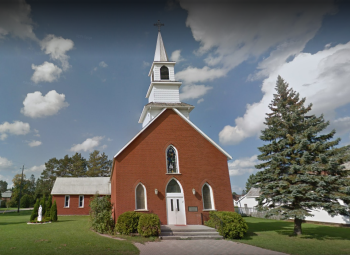
Sacred Heart of Jesus Parish of Trout Creek Ontario
Established in 1894
Mass Times & News
Mass every day Trout Creek, is located at:
165 Main Street West, Trout Creek, Ontario
Monday 8 am Adoration, 9 am Mass
Tuesday 8 am Adoration, 9 am Mass
Wednesday 8 am Adoration, 9 am Mass
Thursday 8 am Adoration, 9 am Mass
Friday 8 am Adoration, 9 am Mass
Saturday 5 pm Mass
Sunday 11:00 am Mass
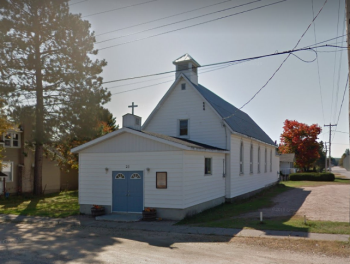
Note: St. Augustine's Church in South River located at: 23 Isabella Street, South River, ON
Mass Time is Sunday at 9:00 am.
** Confessions prior to weekend masses **
Maps location of the Chapel
More information about all the local Catholic Churches in Peterborough Diocese
Lent - 2026 Father Isaac's Reflections
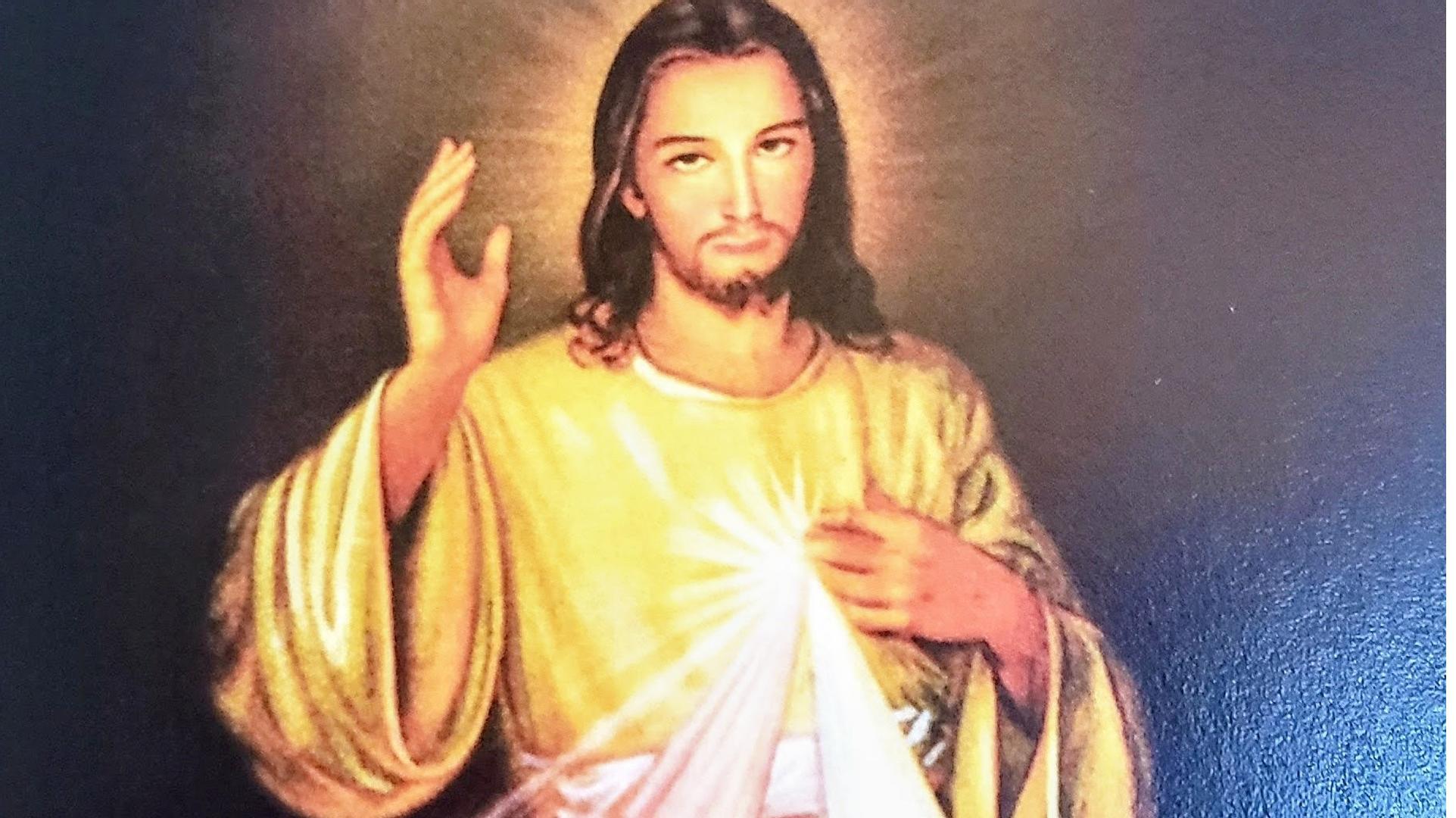
Divine Mercy Sunday
Today is divine mercy Sunday officially established by St. Pope John II, in the year 2000. It was inspired by Jesus’s revelations to Saint Faustina Kowalska in 1930’s.
Our Lord revealed that first Sunday after Easter should be celebrated as the feast of Divine Mercy. A reminder that God’s mercy is the greatest hope for humanity. And that no sin is too great for His forgiveness.
He promised that complete forgiveness of sin and punishment due to sin to those who venerate divine mercy image, who say Jesus I trust in you, and confess their sins and receive Holy Communion with sincere heart.
Today’s readings powerfully highlights the impact of Jesus’ resurrection on his disciples. The disciples who were scattered due to awful event of Good Friday is beginning to gather together.
They formed a very viable community centred on the Breaking of Bread, devotion to Apostolic Teaching, prayer and generous sharing. This is a reminder that Christian Community is essential part of Christian life.
The C.C.C #2030:it is in the Church, in communion with all the baptized, that the Christian fulfils his vocation. From the Church he receives the Word of God containing the teachings of the law of Christ. From the Church he receives the grace of the Sacraments that sustains him on the way. From the Church he learns the example of holiness... and discovers the spiritual tradition and long history of the saints who have gone before him.
Thomas found the risen Lord when he was united with the Community-where two or three are gathered in my name I am where in their midst.
In the Gospel we are confronted again with the challenging, wonderful and illuminating story of Easter. In the evening of the first day of the week, when the doors were locked, because disciples still wondering, afraid and unsure. Jesus comes despite the locked doors and stands in their midst and said peace to them peace be with you.
What is locked doors now? The symbolic of all the ways of fear and doubt. They were afraid of facing crucifixion, because they knew that the next move of the authority could be to clap them down.
This concerns all of us in our fear. Think about something that frightens you, something that you are afraid of, in your family, carrier or health. On the cross we look right in front of those things that frighten us. And in resurrection we know that God’s love is more powerful than all the things that frighten us. He breaks through the locked doors of our fears. I can hear the risen Lord telling us, don’t be afraid. Fear not for I am with you. Don’t be dismayed for I am your God. Yes I will help you.
Thomas place your hands in my wounds-doubt no longer, but believe. Blessed is he who does not see, yet he believes. Thomas was logical and humanly correct. He represents those who eliminate mystery and reduce everything to what reason can grasp(Liberal or Rationalist approach).Pope Benedict vxi said there are two sources of knowledge: knowledge through the senses and knowledge through I believe.
With Thomas’ encounter with the risen Lord he discovered the limitation of human knowledge. He discovered that he could not impose on God his own limited category.
Believing defines a Christian as service defines a servant. Faith is assurance of blessings hope for, the prove of existence of the realities not yet seen,cf Heb 11:1.Faith is waiting on God knowing that He is trust worthy and reliable.
Faith is openness to God who does the impossible. By faith the frightened disciples were transformed to fearless disciples. Thomas from doubting to believing.
The sin against faith is voluntary doubt, refusal to hold as true what God has revealed and the Church proposes for belief.1 Jon 5:4 said that the victory that overcomes the world is our faith. Our faith does not conquer the world through force or violence, but through gentle compassion and tender love.
Our faith should prompt us to reach out and help others-sometimes in ways we never imagined we could.St.Thomas Aquinas said mercy is compassion in regard to someone’s else suffering.
The psalmist said God’ mercy endures forever. God is almighty, but his might is shown in his mercy. Our God is merciful,loving,forgiving and kind. Think if you allowed to be God for a second.
Mercy is a latin word-miserecodai-feelings for the miserable ,one who lacks basic necessities of life. These are deprivations of the body. But a sinner is more miserable because he is deprived of God. This deprivation affects the soul. This is why sin is the greatest misère and sinner the most miserable ,deprived of God he is beret of happiness and peace.
Due to original sin, we sometimes do the opposite of what we know to be morally right. But here is the Good News sin doesn’t have the final word. Pope Francis said God never gets tired of forgiving us-we sometimes get tired of asking for forgiveness.
Jesus came into the world to save sinners. He knows that we are weak and vulnerable. He told many stories about joy when someone returns to Him. The prodigal son -that made a terrible choices-yet when he came back home-his father ran to embrace him. Jesus calls himself a Good Shepherd who searches for the lost sheep. Even on the cross He forgave the thief and prayed for his executioners.
God never stops inviting us back. We experience the mercy of God in a special way in the Sacrament of reconciliation. When we honestly confess our sins to priests and do our penances. We know with certainty that we have been absolutely forgiven.
In Mt.5, Jesus said blessed are the merciful for they shall obtain mercy. It is the consistent teaching of the New Testament that only the merciful shall obtain mercy. Our Christian faith teaches us insistently that to be forgiven, we need to forgive.
Even Jesus concluded his story on the unforgiving debtor with this warning: so also will my heavenly Father do to everyone of you, if you do not forgive your brother from your heart. In Mt.6:12 forgive us our debts as we have forgiven our debtors.
As recipients of divine mercy, we should be bearers of God’s mercy. The Church listed ways through which we can show mercy to others: corporal and spiritual works of mercy.
Mother Theresa said spread love where you go: first of all in your own homes. Give love to your children, to your wife or husband, to a next door neighbour...let whoever comes to you leave a better and happier person.
The early Christian community has shown that doctrine fosters community, prayer and worship sustain spiritual life and generosity reflects the Gospel. In this way the early Christian community acts as a preview of the future kingdom of God, where God’s kingdom is visible and alive.
Our encounter with the risen Lord takes place in prayer and breaking of Bread. Confession is open check to divine mercy .Be merciful as your heavenly Father is merciful.
REFLECTION ON EASTER-2026
The Exsultet captures the event of tonight by calling the host of heaven and angels, ministers of God to rejoice. Let the trumpet of our salvation sound aloud our mighty king’ triumph. Let all corners of the earth be glad. Rejoice, O Mother Church, arrayed with the lightening of his glory, let this building shake with joy.
This is the night when Christ broke the prison bars of death and rose victoriously from the under world.
The resurrection of Christ is the be all and end all of Christian faith. It is the basis of Christian faith. In 1 Cor 15:14- St.Paul said if Christ is not risen from the dead, our faith is in vain, or preaching useless and we are the most pitiable of all people. If resurrection is not true we should level this building and stop wasting our time and money. If Christ is not risen Christianity is a fraud, scam and a joke.
Everything that exists and moves in the Church flow from the resurrection of Jesus: Sacrament, doctrines, dogma,institutions and prayers.
What actually happened was not easy to tell. The apostles were confronted with something overwhelming, strange, a new reality far beyond the limits of their experience. The reality of the event impelled them to bear witness. It is still completely unlike anything they had previously known. The resurrection accounts speaks of something outside our world of experience, space and time.
The disciples were simply overwhelmed with this reality, that after their initial doubt and astonishment, they could no longer ignore the reality of resurrection.
Easter is vindication of all that Jesus stands for: his teachings, works and promises. If He did rise from the dead it means that He is who He said He is, Son of God, equal with the Father.
When Jesus died on Good Friday there was a jubilation in the camp of Satan. He was like this man who was troubling us in Nazareth,Galilee and Jerusalem has finally ended. I suspect that there was banquet in the kingdom of Satan to celebrate his death.
But what he did not know was that Jesus was fulfilling the ancient prophecies. Ps 16 said my flesh will dwell in hope, for you will not abandon my soul to hell, nor let your holy One see decay.
Hos.6:2 come,let us return to the Lord.He has torn us to pieces,but he will heal us,he has struck us down,but he will bind up our wounds.He will revive us after two days,and on third he shall raise us up,and we shall live in his presence.
Jesus said as Jonah spent three days in the belly of a fish, so shall the Son of Man spend three days in the grave. The devil did not hear when Jesus said no man can take away his life from him-that He has the power to lay it down and take it up again.
The Bible said Satan did not know. If he had known he wouldn’t have crucified him. Col 2:15 said victoriously through the cross, He stripped the rulers and authorities of their power, humbled them before the eyes of the whole world and dragged them behind as his prisoners.
The Bible said on the third He rose from dead. In the Book of Revelation 1:18 said I am the living One, I was dead, but now I am alive forever and ever, and mine are the keys of death and underworld.
Things that attest to the resurrection of Christ: empty tomb, witnesses of Angels, miracles in the name of Jesus, Apostolic witnesses. But above Christ’ appearances to his disciples.
In 1 Cor 15:3f. St. Paul said He appeared to Peter and then to the twelve. After-ward, He appeared to more than 500 brothers, most of them are still alive, and He appeared to me.The appearances were not in dreams of trance. They were not hallucinating. It was not a mystical experience. Expect that the degree of recognition and non recognition is based on the manner of apparition.
Thomas doubted the resurrection of Christ. He represents all those who will doubt and had asked all the questions that they would have asked. In 1 Cor.15;35f. St.Paul said someone may ask how will the dead be raised? With what kind of body will they come back? How foolish, what you sow cannot sprout unless it dies. God will give appropriate body, as He gives each seed its own body. There are heavenly bodies and earthly bodies. The body raised is imperishable.
Messages to be drawn from Christ’s resurrection: Jesus is Lord, and death has no power over him. He has the power to bring back the dead-Mk. 5:Jesus said little girl get up, In Jon.11 He said to Lazarus come forth-from grave. May He call to live whatever is dead in us. May all who died in sin his voice and rise to life.Through our baptism we were buried with Him, risen also in baptism, may we walk with Him in newness of life.
Easter makes us to know that there is something more to life than human life, and something beyond death-that grave does not have the final word.
Easter remind us that our home land is heaven. Our hope is not this material world, but in the Lord, and his promises. Easter also gives meaning and support to our prayers, belief and sacraments.
The Easter message should inspire us to live a holy and virtuous life and to make Christ the centre of our lives-loving Him with all our hearts, all our mind and all our strength.
REFLECTION ON HOLY THURSDAY 2026
Today we celebrate the Mass of the Lord’s supper. In this celebration the Church recalls what happened on Holy Thursday and makes it present: the washing of feet and institution of the Holy Eucharist.
I would like us to reflect to-night on the washing of feet and Holy Eucharist.
In the Gospel Jesus poured water into a basin and began to wash the disciples ‘feet and wiped them with the towel. According to Jewish culture and tradition, it is duty of a slave to washes the feet of his Master as he comes in from work. But here the reverse is the case. Jesus is the one washing their feet.
The whole life of Jesus could be summarised as a life of humble service to others. In Lk.22:27 Jesus asks his disciples who is greater, the one who sits at the table or the one who serves? Is not the one who seats at the table? Yet I am among you as one who serves.
In Mat.20:28 says be like the Son of Man, who has come not to be served, but to serve and give his life to redeem many. In Jon.13:15 Jesus after washing the feet of his disciples said: I left you an example for you to follow.
By washing of their feet, Jesus establishes the ministry of service-daikonia.So we invited to consider ways we can give ourselves to the service our families,communites,and the Church. Think of the ways you can be of service to others(Pereal and Dourren playing music to those in seninor homes bi weekly]
The Holy Eucharist was instituted on the night of Last Supper due to Christ’ affection for his diciples.John tells that having loved his own till the end. Jesus wanted to be quit them something very special as his parting gift. And He gave them the gift of the holy Eucharist. Through this gift he makes himself perpetually present to them, to the Church and everyone of us.
At Last Supper, Jesus took bread, blessed and broke it and gave it them and said this is My Body. He then took a cup filled with wine and gave it to them and said this is My Blood. By saying take this and eat all of you-the Lord addresses an invitation to us, urging us to receive him in the sacrament of the holy Eucharist.Jon.6 Jesus says truly I say to you unless, you eat the flesh of the Son of Man and drink his Blood, you have no life in you.
To respond to this invitation we must prepare ourselves.St.Paul urges us to examine our conscience. For anyone who eats and drinks without discerning the body eats and drinks judgement upon himself. Anyone guilty of grave sin-must receive the sacrament of reconciliation before coming to communion.
Hence, the holy Eucharist is the true body and soul of Lord Jesus Christ, together with his soul and divinity under the appearances of bread and wine. The Church teaches for ages that after the words of consecration the bread is no longer bread, but the Body of Christ, the wine is no longer wine, but the Blood of Christ. This is made possible through the words of Jesus and by the invocation of the Holy Spirit.
At that precise second-a door opens between the visible and invisible, heaven touches the earth. At the moment the altar transforms into Gologotha,and the Church becomes the upper room and our souls stand before the crucucified,risen and glorified Lord.Jon.6:51 confirms this-I am the living Bread that came down from heaven.
In every Mass, Jesus descends the altar in the fullness of his Body,Blood,Soul and divinity. He is truly present, in the Eucharist.St.Padre Pio said if we only knew how God regards this sacrifice, we would risk our lives to be present at a single Mass.If people knew there will be police men at the gate of the Church to regulate access to the Church, every time holy Mass is celebrated.
C.C.C 1378: in the liturgy of the holy Mass we express our faith in the real presence of Christ under the species of bread and wine, among others ways y genuflecting or bowing deeply as a sign of adoration of the Lord. The Church offers to the holy Eucharist the cult of adoration, not only during Mass, but outside of it, reverencing the consecrated hosts with utmost care, exposing them to the solemn veneration of the faithful.
St. Pope John Paul ii said the holy Eucharist is the very centre and heart of the Church, parish and each disciple of Jesus. He encourages the bishops,priests,parishioners to be committed to the mystery of the Eucharist. He also urges the youth to gather around the table of the Eucharist which is the source of their life and enthusiasm.
Today we are challenged to make ourselves vessels of service to the Lord. Vessels to be used to bring his kindness,humility,justice,peace and joy to our world. And to make the holy Eucharist the centre of our spirituality, by attending Mass regularly with devotion and commitment .To renew and deepen our devotion to the Blessed Sacrament, by spending quality time with Jesus in the Blessed Sacrament. In His presence there is liberty, fullness of joy, healing and peace that surpasses all understanding.
GOOD FRIDAY REFLECTION-2026
Today the high point of the liturgy is not the holy Mass, but the cross. The Church feels the need to dedicate a special day to the passion of Christ to show its importance and the infinite richness of that moment in which all was accomplished.
The story of the cross is indeed a profound expression of God’s love for humanity. We see the Lord pouring out the ultimate act of sacrificial love.God, through Jesus willingly endured suffering and death to reconcile humanity with Himself. This act demonstrates the depth and breath of God’s love, offering forgiveness, redemption and promise of eternal life.
For 2000 years the symbol of the cross has always be a primary identity of Christian faith. We often see it on homes,jwellery,tatoo and of course Churches. Before the death of Christ was not symbol at all. In the ancient Roman empire it was most dreadful and excruciating way of death used to punish non-Roman citizens especially criminals.
A message with a crucified person as its content would seem to have a little likelihood of success. However God’s action cannot be measured by human standards. For one who advocates human standards, the message of the cross is either scandal or folly.
The prophet Isaiah tells in the first reading that He was wounded for our sins and crushed for our wickedness, the punishment that made us whole fell on him.
Gloria describing the redemptive power of the cross said: I was standing shameful in a courtroom, surrendered by the demons on my left and angel on my right. Satan standing as my persecutor holding millions of record against me.I had no lawyer. Placed on trial for sins I have committed such;lying,cheating,stealing,unforgiving,infidelity,pride,unbelif and doubt. This was the beginning of my tribulation for there was no reason to plead innocent. For all the evidence was with Satan. Demons smile as tears roll down my check. For they knew it was the hour of my demise.
But wait for a minute, there came a light and suddenly, the demons smiles turned into frightening and a man walked into the courtroom, his name is Jesus. He pulled out a lighter and set the record against me on fire.He took the sentence’s file and erases my name and put his name. He took my hands and said daughter I will take the blame. I left the courtroom innocent for Christ handled the debt I was to pay. He became dishonoured that I might be honoured, dirty that I may be clean, guilty that I may become innocent.
As I behold Jesus on the cross, I ponder on the mystery of human suffering. We live in an ocean of suffering. We have only to visit the general hospitals to see things for ourselves. We will notice little infants just born, crying with unbearable pain. We will find teenagers struck down with suffering in the flower of their youth.
But physical suffering is just a drop in this ocean. How many suffer even more in many other ways? Think of psychological suffering of separated spouses or their children who were scattered because of broken homes. Think of the suffering of a widow whose children have abandoned in senior homes and must spend their sunset years languishing in lonliness.Think of the suffering the addicts inflict on themselves and their families. Think about a spiritual suffering of a sinner who has loss hope in himself and in God.
We are all together in this ocean of suffering. Who among us has no burdens to bear, crosses to carry, worries that weigh us down? All of us here or at home are carrying some sort of cross:physciaclly or emotionally. It may be personal or family issue.
St Chrysostom said many are offended when they see any of those who are pleasing to God suffering anything terrible....those who are offended by this do not know that those who are especially dear to God have it as their lot to endure such things,as we see in the case of Lazarus,who was alsoone of friends of Christ but was sick.
This is the mystery of Christain faith.Think of those whom we consider as called to special holiness of life.Most of them suffered terrible diseases and died.
We react in many different ways in trials and tribulations. At time we get angry with God and doubt his goodness and love. How dear you, you allow the on going war in the middle East? How dear you, you allow innocent people to suffer? We tend to make God responsible for all the evil in our world. Just like the thief on the left side of the cross. He did not recognize his sinfulness. He did not accept he was getting what he deserved.
We are meant to see on that cross not simply a violent display,but rather our own ugliness.What brought about Jesus to the cross?Stupidity,anger,mistrust.institutional injustice,betryal of a friend,unspeakable cruelty,scapegoating,fear,etc.In other words,all of our dysfunctional is revealed on that cross.
On the contrary,the thief on the right recognized that they were suffering justly . In other words, the vicissitudes and fires of life become an expiration for sin. Though it brings pain-it smooth’ the way to paradise.
On the cross of Jesus,we meet our own sin.But we also meet the divinemercy that has taken that sin upon himself in order to swallow it up.We found in that cross a way up. The cross is a traffic sign assuring us that we are on the right path toward eternal destiny. We can rest in the shadow of the cross when we are insulted,betrayaled,wounded,misunderstood,wronged,suffering and find consolation and peace.
We stand at the foot of the cross witnessing the mystery of God’s love and salavation.Today we are invited to look beyond our pains and failures and recognize God’s saving work unfolding even in the darkness moment of our lives.
REFLECTION ON PALM SUNDAY-YEAR A -2026.
Today marks the beginning of holy week. In Holy week we journey with our Lord through the mysteries of his passion, death and reflection. Beginning with his triumphant entry into Jerusalem on palm Sunday, we step with Him into the upper Room on the night of the Last Supper and follow Him to Calvary and his cross on Good Friday and then to Easter Sunday.
The themes focus on Christ’ humility, his role as a suffering Servant and ultimate victory of God’s love over death. Palm Sunday recalls Christ’s entry into Jerusalem to accomplish his paschal mystery. The famous story starts with Jesus sending his disciples to find a donkey and riding the donkey into the city of Jerusalem. A very large crowd spread their garments on the road, and others cut branches from the trees and do the same. They went ahead of Him shouting Hosanna to the Son of David! Blessed is he who comes in the name of the Lord.
Jesus enters the city not as a warrior on a warhorse, but as a humble king on a donkey. This highlights worldly power and the kingdom of God, which is built not on force or dominance, but in humility and peace. Jesus enters the city to fulfil the ancient prophecy of Zechariah 9:9-10;rejoice great daughter of Zion! Shout for joy O daughter of Jerusalem-see your king is coming just and victorious, humble and ridding on a donkey, he will reign from see to see, and from the river to the end of the world.
Prophetic ps 18: describes the coming of the future king,the Messiah to the city of Jerusalem. So the crowd was welcoming Christ both as a king and Messiah. The King that was welcomed into Jerusalem, was also a priest, who ascends the altar to offer sacrifice. So Jesus was coming into Jerusalem as a King, Messiah and a priest to offer sacrifice, not on the altar of the temple, but of the cross.
For the Church palm Sunday is not a thing of the past, just as the Lord entered the holy city that day on a donkey, so too the Church sees him coming again and again in the humble form of bread and wine-through the ministry of the priest, who acts in person of Christ.
Palm Sunday invites us to welcome Christ into our hearts as our king and follow him to the cross. Let us spread ourselves under his feet, and not our garments or branches of trees, which in matter of time wastes away and delights the eyes only for a brief hours. May we clothe ourselves with Christ’s compassion, humility and imitate his willingness to sacrifice for the good of others. May we be true neighbours to all in trouble and distress.
In the Gospel there is a shift in pattern-from triumph to passion. This is a reminder that we must not forget that Christ is not only a king, but also a suffering Servant. This contrast is very significant. For God to redeem us, He has to become human.
After the Last Supper, Mathew presents us with Jesus agony in the garden. Mathew mentioned garden to remind us that, Jesus is the New Adam, the old Adam was defeated on a tree, and New Adam conquered through the wood of the cross. Christ’s victory came through enduring of his cross. In the first reading the prophet Isaiah tells us that suffering Servant willingly faces humiliation, rejection and pain.
The palmist gives voice to the anguish and despair of his suffering: my God! My God why have you abandoned me? This reminds us that even in the darkest moment of Jesus’ life, he remained connected with his Father. He was deliberately obedient to his Father’s will.
Contrary to the crowd that shouted Hosanna and later crucify him. We see in the crowd instability of human hearts-how fragile we are-how easily we compromise-we are fair weather friends. Examine your fidelity to Christ-Do we sing hosanna every Sunday ,and renounce him when the going gets too hard or crucify him with our sins?
In the second reading St. Paul beautifully illustrates Christ’self-emptying:though he was in form of God,He did not count his equality a thing to be grasped, He emptied himself taking the form of a servant, and accepted death-even death on a cross. But what appears as a defeat is a path to victory over sin and death.The cross is the weapon that shoots the devil.
Responding profoundly and personally to Jesus means stepping out of comfort zone and walking the way of Jesus. The way of Jesus is a way of the cross. It is narrow way. It is a difficult way. Our pilgrimage through life may have some twists and turns along the way, but we are confident in the Lord who has gone before us, has defeated the powers of darkness, and who invites to follow him on the great adventure and journey of faith.
In logic of Jesus, life comes only in, through and after death, victory comes after apparent defeat and gain after loss. Good Friday must be preceded by Easter Sunday.
So let us unite whatever we suffering with the passion of Christ. Ps.22 says we must commit our cause to the Lord, trust that He will act. We are to be patient in moment of suffering and listen to what the Lord is telling us. We must not turn bow out, but follow the path that God marks for us. But be rest assured that at the end of tunnel there will be a light.
REFLECTION ON 5TH SUNDAY OF LENT
YEAR A-2026
On the fifth Sunday of lent the Church invites us to reflect on God’s power to restore and to renew us, even when the situation is hopeless.
The Gospel episode is the famous raising of Lazarus . John begins by telling us the characters of his two sisters. Mary was the one who anointed the Lord with perfume and wiped his feet with her, her brother Lazarus was ill. So the sisters sent message to Jesus,Lord,he whom you love is ill. But when Jesus heard this, he said, this illness doesn’t lead to death, rather it is for God’s glory, so that the Son of God maybe glorified through it.
Accordingly, though Jesus loved Martha and her sister and Lazarus, after having heard that Lazarus was ill, he stayed two days longer in the place where he was. Then after he said to the disciples let us go to Judea again. The disciples recognised that Judea is becoming dangerous for Jesus and them.
Then Jesus told them Lazarus is dead. For you sake am glad I was not there, so that you may believe. Thomas said let go and, that we may die with him. Thomas was not only a doubting Thomas, but also courageous.
When Jesus arrived Bethany Martha walked up to him and said Lord if you were here my brother wouldn’t have died. Jesus said to her your brother will rise again. Martha said I know that he rise again in the resurrection on the last day. Jesus said I am the resurrection and life. Do you believe this? Yes I believe Lord, you are the Christ, the Son of God, the one coming into the world.
It is not true that Jesus didn’t know that Lazarus was ill, he knew. And John said he stayed two days after the message because, he loves Lazarus. This doesn’t make sense. But Jesus is not ordinary man, he doesn’t have ordinary love. He loves as God does. He allows Lazarus his friend to suffer and die because he is going to raise him from grave.
St. Chrysostom said many are offended when they any of those who are pleasing to God suffering anything terrible...those who are offended by this do not know that who are especially dear to God have it as their lot to endure such things, as we see in the case of Lazarus who was also one of the friends of Christ but was sick.
This is a mysterious reality of Christian life, that those who are called to special holiness, those whom God loves in a special way he frequently allows to suffer in a great way. Pick the life of the great saints and it will baffle you, what they suffered.
On the natural level one would say that God doesn’t love these people, because they were sick and suffered and died. But John is revealing to us that those who God loves in a special way he draws into the mystery of his own suffering. It doesn’t mean that Jesus didn’t feel the pain of Lazarus death. He felt the pain of the loss. He doesn’t diminish the reality of suffering and horror of suffering by redeeming it.He wept. He recognises the evil of suffering and death.
However, He allows it to take place because there was greater glory to be revealed. Peter Chrysologus said for Christ it was more important to conquer death than to cure disease. He showed his love for his friend not by healing him but by calling him back from the grave. Instead of a remedy for his illness, he offered him the glory of rising from the dead.
The the Church picks up today’s Gospel as we approach the Passion Sunday to remind us that Jesus has power to raise the dead, even after the body of Lazarus has been decomposed. Decomposed body is not a barrier to Jesus’s power to give life.It points in twofold ways: power over grave and also our own resurrection.
Andrew of Crete homily on raising of Lazarus quote: Lazarus come out...as a friend I am calling you, as Lord I am commanding you...come out-let the burial linen be undone so that they can recognize the one who was put in the tomb. Come out...come out of the tomb. Teach them how all creation will be enlivened in a moment when the trumpet’s voice proclaims the resurrection of the dead.
By giving life to Lazarus, God’s power of giving spiritual life is revealed. This miracle of raising Lazarus to life anticipates the glorious resurrection of Jesus the Lord and our own resurrection.
Maybe we lie buried in the tomb of our sins, evil habits and doubt. Jesus is calling us out from anything that keeps us down:brokenness,shame,despair.God’s delay is not God’s absence. He will roll away any stone against our life, joy and peace.
REFLECTION ON 4TH SUNDAY OF LENT YEAR A 2026.
The fourth Sunday of lent is known as the laetare-Sunday. As we approach Easter we look forward to the joy of resurrection. Easter is the breakthrough which has determined the meaning of all history.
The Gospel presents us with the story of healing of the man born blind. The disciples asked Master, why was this man born blind? Because of his own sin or those of his parents? According to Old Testament thinking human suffering is due to the sin of either the one who suffers or of one’s parents. But Jesus; reply shows that sin is not the cause of all suffering. Jesus has not committed any sin, yet he suffers. Suffering is a fact in human life, and for the believer it could be an opportunity to allow God to work out his plan.
In the case of this blind man it is for the manifestation of God’s glory through Jesus’s action. Miracles are manifestations of God's power and compassion.
We are co-workers with God. When we spend our time to help those in trouble, in distress, in pain, in sorrow, God is using us as channels to meet the needs of his people. To help people in need is therefore to manifest the glory of God.
The story of the man born blind from birth is a true life story . But John tells it in such a way that we could see the connection with our baptism. lt is a perfect example of how each one of us is born in blindness and darkness of original sin . It was not our sin nor that of our parents. But we are all trapped in this mess.
Think of it this way, is like being born in a dysfunctional family. It is not the fault of the child that is born into a family that is marked by physical abuse or alcoholic abuse but it affects him.
We are born into a world marked by cruelty, hatred, violence, evil and sin. Even before we begin to make choices. So we are born into a dysfunctional world. But Jesus is the enemy of this blindness, that obscures our vision of things. We maybe able to function very well in political and economic order and all of that. But if we are concerned is only for the things of this world we are blind to things that really matter.
Jesus spat on the ground and made mud with the saliva and spread the mud on the man’s eyes, saying to him,go, wash in the pool of Siloam. The reason for this was to remind us that the he who restored the man to health by anointing his eyes with clay is the very one who fashioned the first man out of clay, and that our flesh receives the light of eternal life through baptism. By the virtue of our baptism we are immersed in Christ symbolised by the pool. Thus we are healed and enabled to see things from God's perspective.
Some people hold as true what they can see with their eyes, feel through their senses, or verify by science and think that they know it all. But the truth is that not all truth is subject to scientific investigations.
Blindness in the Bible is very often a symbol of spiritual blindness: the incapacity to see what truly matters. Focused on the worldly goods of wealth, pleasure, power and honour, most people don’t see how blind they are to the truly important things: giving oneself to the grace of God and living a life of love.
Let us ask for spiritual vision-to know what our life is all about, to know the big picture, to know where we are going. We can have all the wealth, pleasure, honour and power we want. We can have all the wordily goods we could desire. But if we don’t see spiritually, it will do us no good, it will probably destroy you.
Christ is the light of the world. And light represents truth, illumination and understanding, to be able to see and know the truth. The truth of who God is, who we are, and all that life is all about. Jesus wants to cast his light into our darkness. No matter our years of Church membership, there are areas of darkness and blindness in our lives, that we are called to leave behind and embrace the light of Christ
In the second reading St. Paul says that deeds of light are good, just and true. While the deeds of darkness are shameful and no one should justify them.
There is no fellowship between light and darkness. Jesus comes to expose deeds of darkness. How we respond to his teaching will determine if we prefer light to darkness, life to death.
We have different responses in the characters of the Gospel. The Pharisees in spite of the testimony of the man born blind refused to accept Jesus’ heavenly origin. They even stood to the level of harassing and slandering the witness. They rejected Jesus and remained spiritually blind, due to their ego, arrogance and self-sufficiency .They closed their hearts to the truth.
The third response was the parents of the man born blind. Due to fear of being ostracized, they couldn’t bear witness about their son. They succumbed to social pressure. They want be part of the Church and world. There are some people who skip prayer over meal in restaurants, because they don't want to stand out, odd man, they are afraid of what others may think of them.
May we invite Jesus this week to heal our blindness, particularly of being worldly minded. And to grant us the grace to see the World and people as Jesus sees it and to stand for and defend the truth of our faith.